
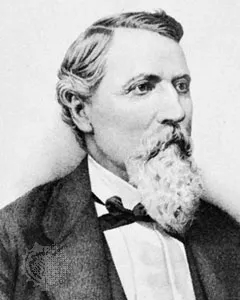
Bi-state projects bring U.S., international guests together for dedications of ‘The Hecker Project’
ST. LOUIS, MO – Under the leadership and support of the German-American Heritage Society of St. Louis, a group of organizations and individuals began a bi-state project in 2019 that will officially conclude this September with an event to recognize and celebrate the life of Col. Friedrich K. Hecker, who is considered by many to be one of the most influential 19th Century German-Americans.
This celebration is being timed to coincide with the visit here of a delegation of nearly 30 people from Hecker’s birth-town in Germany, including its current mayor. Two authors of books on Hecker – Sabine Freitag and Steven N. Fuller – are also part of the delegation.
Hecker was a leader in his homeland of Baden, Germany during the 1848 Revolution. After emigrating to the United States, he first served in the Union Army as an enlisted man. He was quickly appointed an officer, leading two regiments to help defend and reunite his adopted country during the American Civil War.
TUESDAY, SEPTEMBER 9, 2025 AT 11:00 A.M. BENTON PARK CORNER OF WYOMING AND ILLINOIS
ST. LOUIS, MO 63118
The rededication of the restored Hecker Obelisk in St. Louis’ Benton Park will be held on Sept. 9 at 11 a.m. The community, especially the Benton Park neighborhood, is invited to this celebration which will include a substantial number of individuals who worked to help bring the dilapidated monument back to life, as well as the delegation from Germany and Hecker descendants.
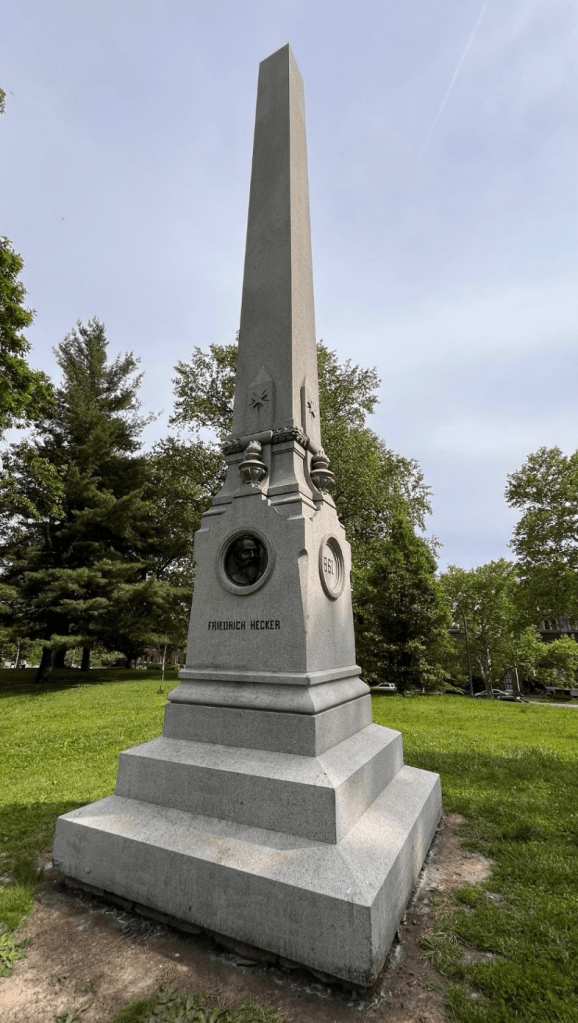
The monument’s restoration was accomplished with the cooperation of the City of St. Louis Parks Department and the City of St. Louis Board of Public Service.
A major goal of the monument’s restoration was to recreate original bronze elements which were stolen many years ago when the obelisk was vandalized. The north side of the monument featured a rondel with a bronze bas-relief portrait of Hecker, while the south side featured a bronze oakleaf wreath. The present-day recreations were cast in resin with a bronze patina.
According to newspaper accounts of the time, Hecker was so renowned in the St. Louis area that the original 1882 dedication of this obelisk attracted some 15,000 people. That ceremony was preceded by a parade of so many groups that the procession itself stretched for one-half mile. People also lined the streets and watched from buildings along the parade route. At the original dedication, Hecker’s granddaughter unveiled the obelisk. This time, two of Hecker’s great-great-great-granddaughters will participate in the rededication. One of them is St. Louis KMOV reporter Caroline Hecker.
Friedrich Karl Franz Hecker was born Sept. 28, 1811, in Baden, Germany. There, he became a lawyer, politician and revolutionary. He revered the United States Constitution and Bill of Rights and was one of the most popular speakers and protagonists of the 1848 Revolution where he worked to make Germany a Republic. When his and other’s efforts failed, he emigrated, along with many other “Forty-Eighters,” to the U.S. where he bought a farm and settled in Summerfield, Illinois about 18 miles east of Belleville.
Like most Forty-Eighters, his attention became increasingly focused on domestic political issues in the United States. He remained active intellectually and politically, gave lectures, supported the Turnverein (gymnastics clubs for physical fitness), played a role in the founding of the Republican Party and in the election of Abraham Lincoln and was strongly committed to the cause of abolition.
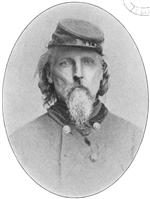
At the outbreak of the Civil War, he volunteered for the Union Army and first served as a private under General Franz Sigel, another Forty-Eighter from Baden. Hecker was subsequently appointed colonel and commanded the 24th Illinois Infantry regiment. He was then commissioned to recruit the 82nd Illinois Infantry Regiment, using his own funds in part for the purpose. He was severely wounded leading the 82nd at the Battle of Chancellorsville in May 1863. He missed the Battle of Gettysburg in July because of his wounds, but the 82nd went on to distinguish itself there. He later returned to command in the fall after his recovery until being granted an honorable release in March of 1864.
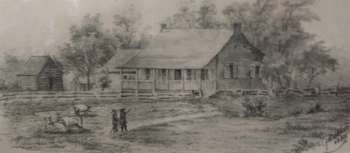
After the war, Hecker mostly lived on his Illinois farm but became more involved in the German-language press and in lecture tours. During his lifetime he was recognized as an influential national figure, and his ties to St. Louis and Missouri included his writings for the Westliche Post, a premier German-American newspaper published in St. Louis.
On March 24, 1881, at the age of 69, he passed away at his farm. For his contributions, Hecker will be inducted into the virtual German American Hall of Fame http://gamhof.org in November.

 Missouri Germans Consortium
You must be logged in to post a comment.